Mother’s Day Vocabulary for Kids: Engaging Classroom Ideas
Mother’s Day vocabulary for kids is a topic I almost skipped last year. I figured my students would find it cheesy, or worse, awkward. One of my boys had lost his mom the year before and I wasn’t sure how to handle that. But I went ahead with it, made a few adjustments, and it turned out to be one of the most engaging classes I’d had all term. So I kept it, tweaked it, and I’m sharing what works here.
It isn’t just seasonal filler, either. Done right, it pulls together family words, action verbs, feelings vocabulary, and ready-to-use phrases, all in one topic children actually care about. That combination is rare. Usually you’re dragging kids through a unit on the weather or classroom objects and wondering why nobody’s talking. This one’s different.
Why this topic gets kids speaking
Young learners remember words better when those words mean something to them. This isn’t a radical idea. It’s just true. A child who has watched their mom bake a cake already has half the vocabulary filed somewhere. Your job is to give it a name. As Nation (2011) points out, vocabulary sticks much better when it’s tied to something meaningful and actually used.
Mother’s Day vocabulary for kids also spans multiple word types without feeling forced. You can introduce people (mum/mom, grandma), objects (card, ribbon, chocolate), actions (decorate, give, bake), and short phrases (This is for you, You are special), all without jumping between unrelated topics. It flows. And when vocabulary flows naturally from one thing into the next, students don’t notice they’re learning. They’re just doing something.
One more thing worth saying: some kids who barely say a word during a grammar lesson will suddenly start talking when the topic is personal. I’ve seen it enough times now that I plan for it.
Mother's Day vocabulary for kids: what should you actually teach?
Keep it short. Here’s roughly what I’d aim for:
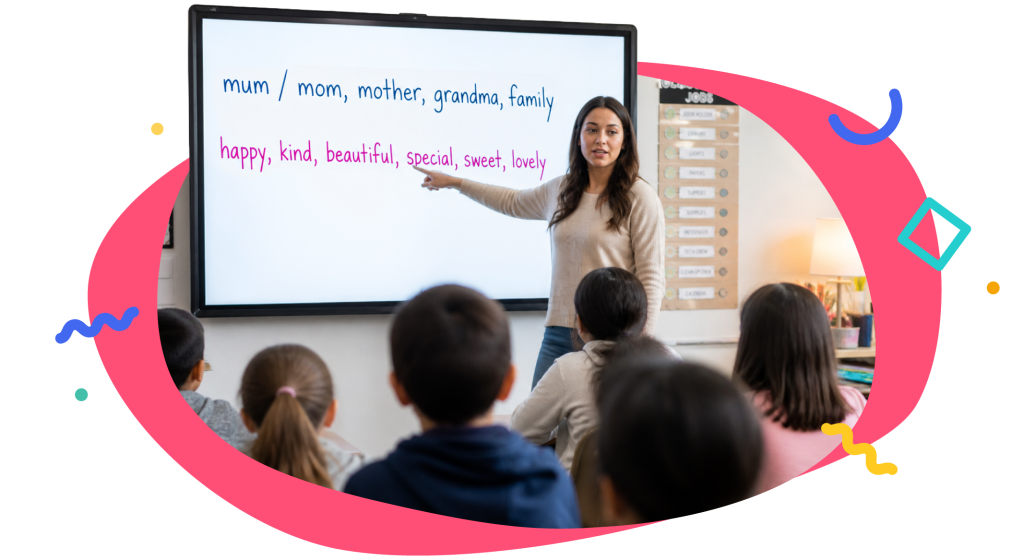
Family words: mum / mom, mother, grandma, family
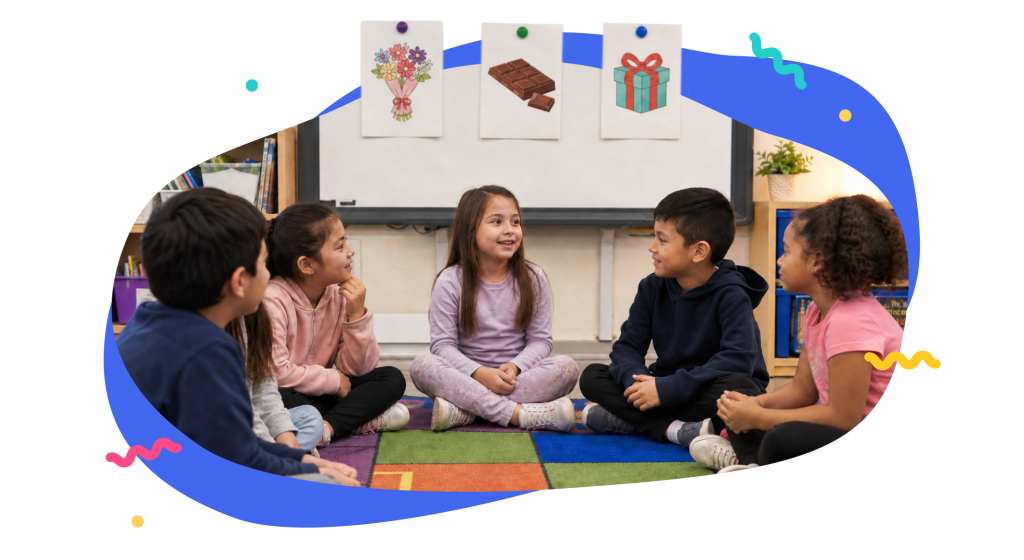
Gift and celebration words: card, flower, cake, chocolate, gift, surprise, ribbon, picnic, present
Action words: give, make, draw, write, decorate, bake, celebrate, hug, kiss
Feelings and descriptions: happy, kind, beautiful, special, sweet, lovely
Phrases worth learning whole: Happy Mother’s Day!, I love you., This is for you., I made this for you., You are special.
Eight to twelve items is usually plenty for a single lesson. I used to try to squeeze in more and it didn’t help. What matters is that students do something useful with the words, not just see them once and move on.
The mix of nouns, verbs, adjectives, and ready-made phrases matters more than it sounds. If you only teach card and flower, students can point to things. If you add decorate, write, and This is for you, they can suddenly build a sentence. That’s the difference between recognition and actual use.
Getting the words into their heads first

Before any worksheet, before any pair work, students need to meet the words.
Flashcards are still the fastest way to do this, even though they’ve been around forever. A picture of a cake beats a translation every time, especially with younger learners. For verbs like hug, kiss, or decorate, just mime it. It sounds obvious but it works, and students tend to remember words they’ve physically acted out.
One thing I’ve started doing is presenting the words in small groups rather than one long list. I’ll introduce mum, mother, and grandma first, pause, then move to card, flower, and ribbon. It gives students a moment to absorb each cluster before we add more. Somehow it also makes the vocabulary feel more organized in their heads, not just on the board.
A short model text helps too, something like: It’s Mother’s Day. We make a card. We draw a flower. We decorate the gift. We give Mom a hug. It’s barely five sentences, but it shows the words doing something. Students hear how they fit together before they have to use them themselves. Don’t skip this bit. This kind of step-by-step build-up is very much in line with what Anderson (2016) describes in the classic PPP (Presentation, Practice, Production) approach.
Repetition matters, but it needs to stay lively. Choral repetition is fine in short bursts. Mime, yes/no questions, quick matching, pointing games: these keep the energy up without turning the first part of the lesson into a drill.
Practicing Mother's Day vocabulary for kids: where the real learning starts
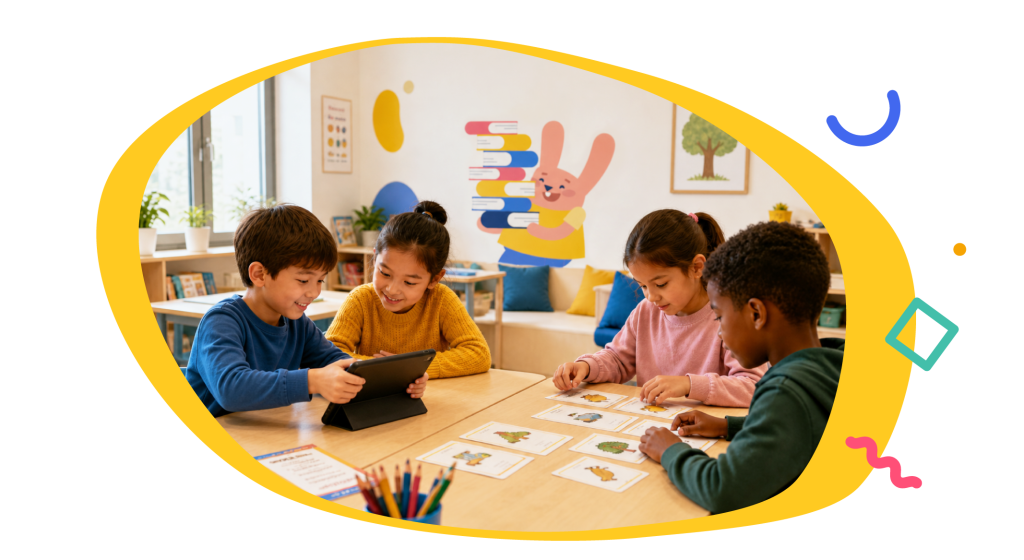
Once students have a basic sense of what the words mean, they need structured tasks to work with them more actively.
For Mother’s Day vocabulary for kids, I’d use a mix of matching words to pictures, unscrambling letters, sentence completion, and choosing the correct word from two options. A worksheet that has worked well for me is, for example, this one. These tasks move from recognition toward something closer to real use, in small enough steps that students don’t get stuck.
But a worksheet only fits in well after some oral work. If you hand out a vocabulary sheet at the start of the lesson, it often just creates anxiety. If students have already heard, repeated, and acted out the words, the same worksheet feels like a confidence boost instead.
I do want to say: pair practice at this stage is underrated. Students asking each other What is this? / It’s a flower or What do you give your mom? / I give her a card is genuinely useful. It’s not glamorous, but it adds speaking time in a controlled way that writing alone can’t provide. You just need to keep it short and make sure both partners get a turn.
When going over answers, try not to just read through them. Ask a student to point to the flashcard on the board. Have them mime the action word. Keep the vocabulary visible and active for as long as possible.
Letting students actually use the language

Here’s where the lesson pays off, or doesn’t, depending on whether you leave enough time for it.
A short writing task works well as a way to personalize the vocabulary. Beginners might manage: I love my mom. She is kind. This flower is for you. That’s enough. Students who are stronger can write two or three sentences about a gift they’d give, or describe a card they’d make. Even basic texts feel meaningful when they’re directed at a real person.
Speaking tasks don’t have to be complicated. Short pair exchanges such as What do you give your mom? Do you write a card? What does she like? give students a reason to use the vocabulary, not just remember it.
If time allows, a small project works really well with this topic. Students draw a card or gift, label it, and write a couple of sentences. This kind of task, something like My Mother’s Day Surprise, gives the lesson an actual outcome. Students leave with something made, not just notes copied from the board.
One thing I’d say clearly: give students the option to write for a grandmother, an aunt, or another caregiver. Some children find the topic uncomfortable. Some have complicated family situations. A small adjustment removes that tension without losing any of the language goals.
When it doesn't go smoothly
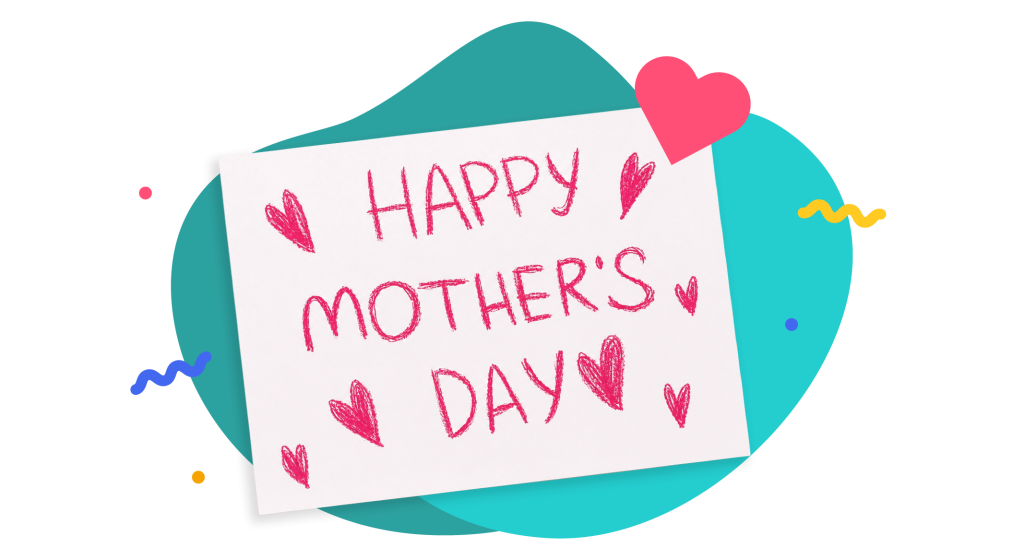
A few things can go wrong. Some students won’t know celebration vocabulary from other contexts, so the words land with zero recognition. Just build in more repetition at the start and you’ll be fine. The more personal angle occasionally makes a child go quiet, which is usually a sign they need the flexible option mentioned above, not that the lesson is a bad idea.
The main mistake I see is rushing through the introduction to get to the activity. If students haven’t properly met the vocabulary, no worksheet will save the lesson.
A few final thoughts on teaching Mother's Day vocabulary for kids
What I keep coming back to is that this topic does something most vocabulary units don’t. It gives students a real audience. They’re not learning flower in the abstract. They’re learning it because they might write it inside a card for someone they love. That’s a different kind of motivation, and it shows in the work they produce. As Thornbury (2002) emphasizes, words really start to stick when learners use them to say something that matters to them.
Keep the word list focused, build in repetition without making it mechanical, and leave enough time at the end for something personal. That sequence tends to work.
FAQ
How many words should I teach in one lesson?
Around 8 to 12 for most young learners. Quality of use matters more than quantity.
Is Mother's Day vocabulary for kids suitable for beginners?
Yes. The topic is visual, familiar, and easy to personalize. It works well even with very early learners.
What's the best way to introduce new words?
Flashcards, gestures, and a short model text. Real objects work too if you have them.
When should I use a worksheet?
After students have already heard and used the words at least once orally.
What can students do after the worksheet?
Write a short card, describe a gift they’d give, do a simple pair exchange, or make a small illustrated project.
References
Anderson, J. (2016). A potted history of PPP with the help of ELT Journal. ELT Journal.
Nation, I. S. P. (2011). Research into practice: Vocabulary. Language Teaching, 44(4), 529–539.
Thornbury, S. (2002). How to Teach Vocabulary. Pearson.

About the author
Anikó László
Anikó has a background in primary and secondary education and previously worked as an English teacher with teenage learners, which gave her valuable insight into the needs and interests of this age group. At BOOKR, she works as an Educational Content Manager, with a main area of expertise in curriculum alignment. She plays a role in ensuring that the content of BOOKR’s library aligns with a wide range of curricula used across different parts of the world. In addition, she is responsible for writing texts, creating games, and developing supplementary teaching materials. One of her key projects at the company is refining the adaptive placement test. She also delivers webinars for teachers, offering practical advice, sharing her experience with BOOKR, and supporting educators in making the most of the application.


You might also like...
What Is Content and Language Integrated Learning (CLIL)? A Practical Guide for Teachers
BOOKRClass | 20.05.2026.